300 ingredients with no grouping = costs you can't read
Group ingredients into categories that match your business — proteins, dairy, produce, packaging, labour. Your categories, your rules.
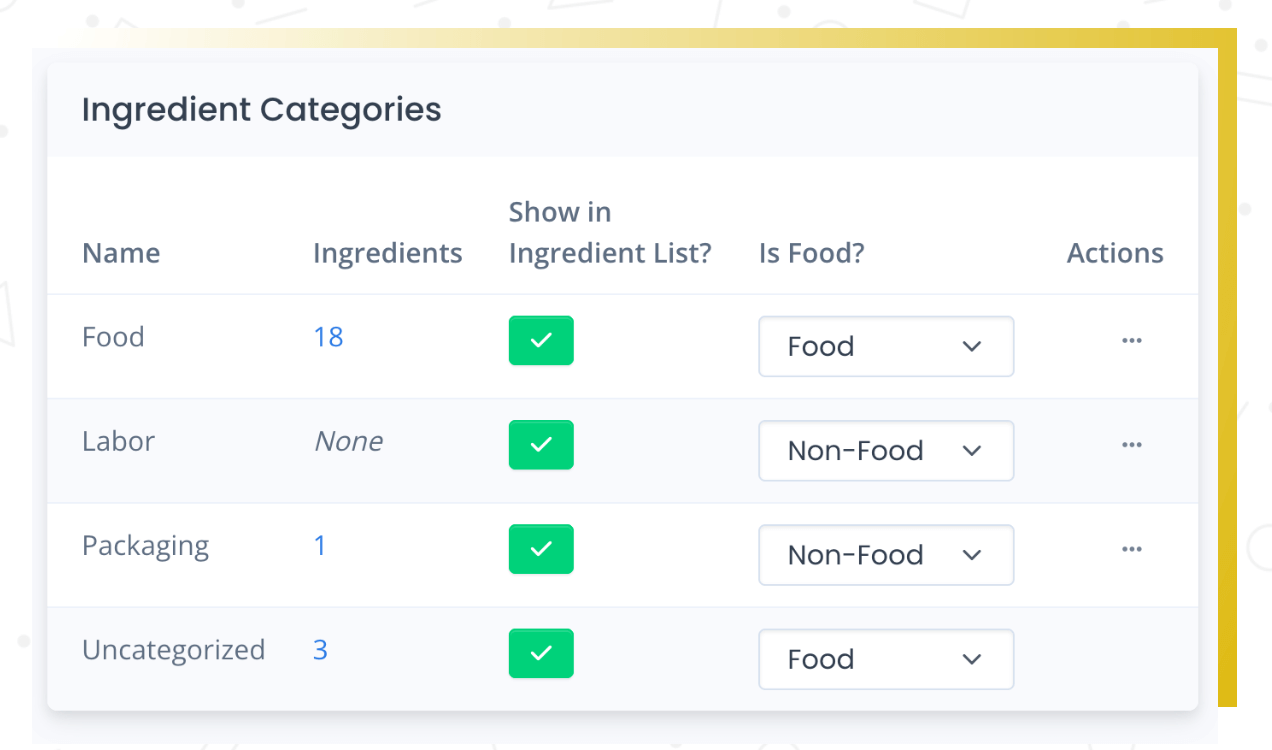
Your cost structure is invisible without categories
You have 300 ingredients. Some are proteins, some are packaging, some are labour. Without categories, they're all mixed together and your cost breakdowns mean nothing.
- Ingredients lumped together with no meaningful grouping
- Recipe cost breakdowns are just flat lists of numbers
- Shopping lists aren't organized by how you actually buy
Your categories define how costs group, how ingredients sort, and how shopping lists organize.
Every ingredient belongs to a category — and you decide what those categories are. Proteins, dairy, produce, dry goods, packaging, labour — whatever grouping makes sense for how you think about your costs and your kitchen.
Categories control how costs are grouped in your recipe breakdowns, how ingredients are organized in your lists, and which features apply to which ingredients. You can also choose whether ingredients from a specific category show up on printed recipe sheets or stay hidden (useful for labour or overhead costs).
What you get
Your categories, your way
Define categories that match how your business works.
Meaningful cost breakdowns
See at a glance what percentage of a recipe is protein, produce, or packaging.
Organized shopping lists
Shopping lists group by category, making purchasing faster.
How it works
Define your categories
Create the groupings that match how you buy and think about costs.
Assign ingredients
Put each ingredient into its category.
See the impact everywhere
Recipe cost breakdowns, shopping lists, and reports all use your categories.
Why this matters
Your categories, your way.
A good category structure makes everything easier — from reading recipe costs to organizing your ingredient list to building shopping lists. Set it up once to match how you actually think about your inventory and costs.
Frequently asked questions
Structure your ingredients, clarify your costs
Good categories make everything else in the system more useful.