Finding out you're short at 6 AM Saturday is expensive
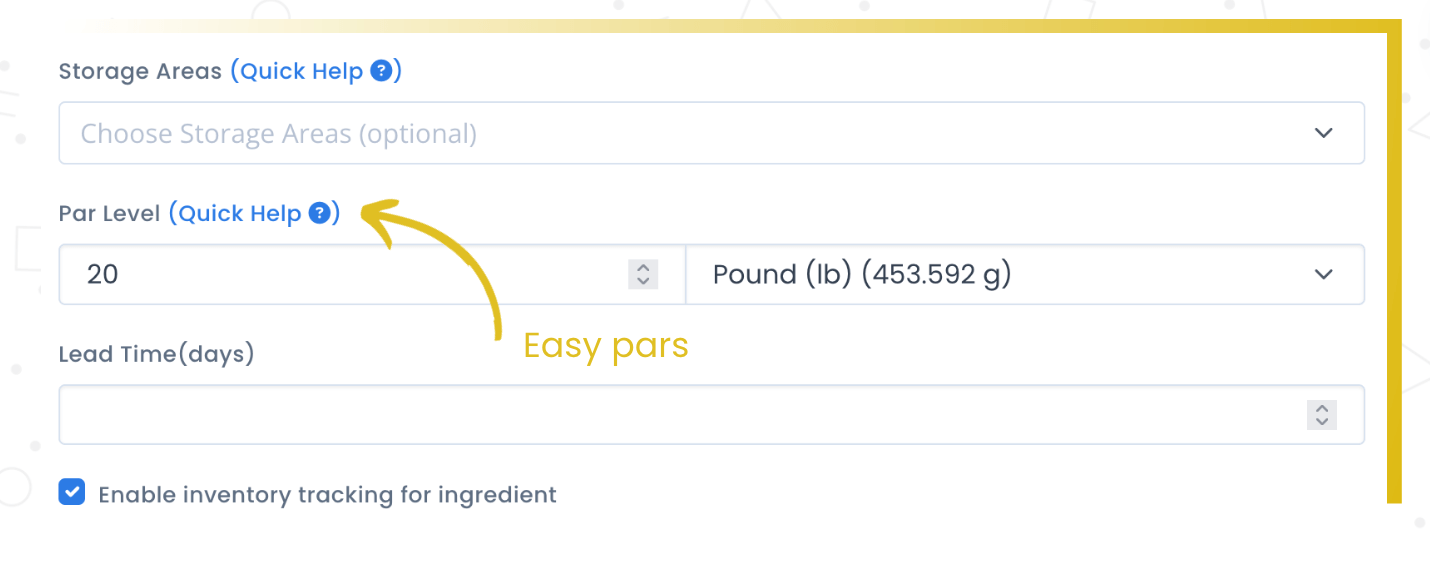
Set minimum stock levels. When inventory drops below par, you see a warning. Catch it before 'low' becomes 'out'.
Emergency purchasing costs more than the ingredient
You discover you're out of cream cheese at 6 AM on a Saturday. Now it's an emergency run at premium price, or a menu item you can't sell today.
- No warning system before you hit zero
- Emergency runs at premium prices
- Missed sales because key ingredients ran out
Par levels give you a heads-up before 'low' becomes 'out'.
Par levels are the minimum quantities you want to have on hand for each ingredient. Set them in Recipe Cost Calculator, and when your inventory drops below par after a count or a production run, you'll see a warning.
This is a straightforward way to make sure you never start the week without your essentials. The par level warnings show up on your dashboard and in your inventory views so they're hard to miss.
What you get
Set your minimums
Define the minimum quantity you want on hand for each critical ingredient.
Automatic warnings
When inventory drops below par, a warning appears immediately.
Order proactively
See what's below par and add it to a purchase order before it's an emergency.
How it works
Set par levels
Define minimum quantities for your critical items first.
Take inventory counts
Use the counting features to track actual stock levels.
Act on warnings
When stock drops below par, order before you run out.
Why this matters
Never start short.
Par levels are simple but effective. Set your minimums, and the system tells you when you're below them. It catches the things you'd otherwise find out about when you're halfway through prep and realize you're out of something critical.
Frequently asked questions
Stop finding out you're short at the worst moment
Par levels catch low stock before it becomes an emergency.