If you cost on purchase weight, your costs are wrong
Carrots have peels. Meat has trim. Set the usable percentage and every recipe cost reflects what you actually use — not what you bought.
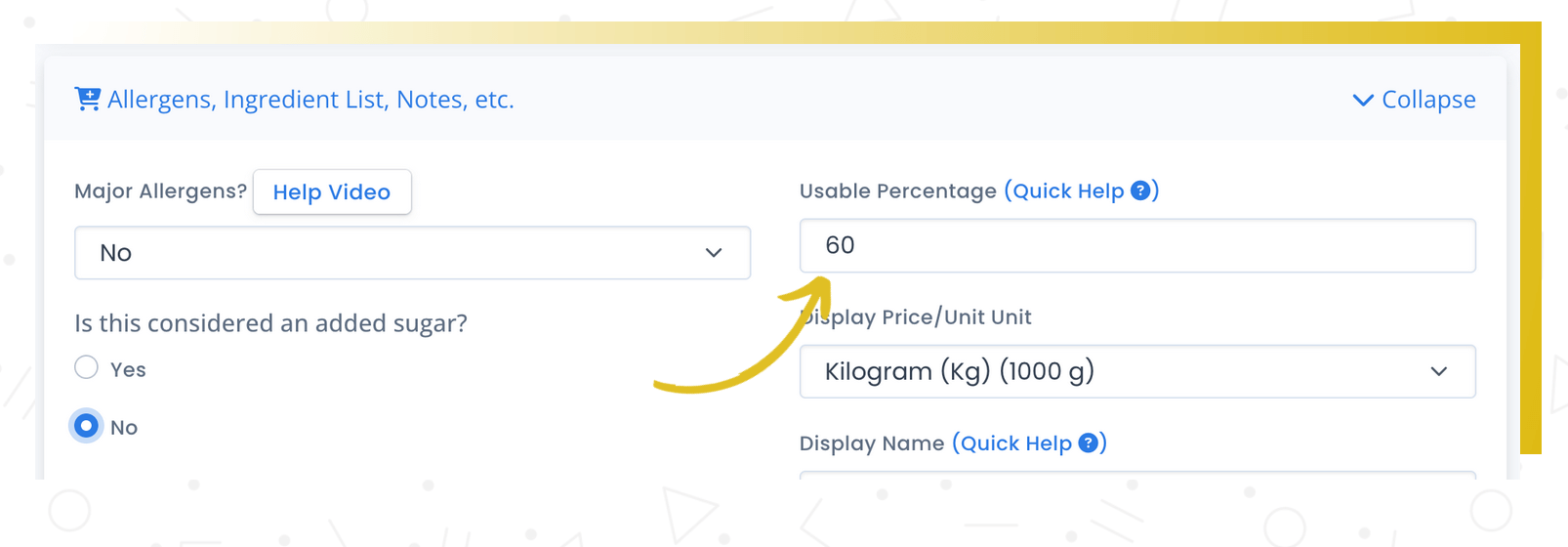
Your real food cost is 5-20% higher than you think
You buy 1kg of carrots at $2. After peeling, you have 850g. Your actual cost per usable gram is higher than the invoice says. Multiply that across every ingredient and your margins are built on wrong numbers.
- Costing on purchased weight, not usable weight
- Waste percentages vary by ingredient — nobody tracks them
- Small errors per ingredient compound to big errors per recipe
Set the usable percentage once. The system adjusts every cost calculation automatically.
Not every ingredient is 100% usable. Carrots have peels, meat has trim, herbs have stems. If you're costing a recipe based on the purchased weight but only using 80% of it, your costs are off by 20%.
Recipe Cost Calculator lets you set a usable percentage for any ingredient. Set carrots at 85% usable and the system automatically adjusts the cost per usable unit. Your recipe costs reflect what you actually put on the plate, not what you bought.
What you get
Accurate usable cost
Set carrots at 85% usable and the system costs on 85%, not 100%.
Automatic adjustment
Waste percentages apply everywhere — recipe costs, shopping lists, inventory.
Find hidden cost drivers
Discover which ingredients have the most waste and whether the yield justifies the price.
How it works
Set usable percentages
Tell the system how much is actually usable — carrots at 85%, chicken thighs at 78%, herbs at 60%.
Costs adjust automatically
Every recipe using that ingredient now costs based on usable portion.
See the real numbers
Recipe costs, margins, and shopping list quantities all reflect what you actually use.
Real costs vs. invoice costs
| The old way | With RCC |
|---|---|
| Cost recipes on purchased weight — always understated | Cost on usable weight — accurate to reality |
| Treat everything as 100% usable regardless of trim | Waste percentages per ingredient, applied everywhere |
| Recipe costs 5-20% lower than actual — hidden margin leak | True costs mean true margins — no surprises |
Why this matters
More accurate costs, less guesswork.
Waste percentages are one of those small details that add up. A few percent here and there across all your ingredients can mean your recipes actually cost 5–10% more than you think. Getting this right means your pricing is based on reality.
Frequently asked questions
See what your recipes actually cost
Waste percentages close the gap between invoice costs and real costs.